Free delivery within London and across the UK

Sustainable packaging is becoming a bigger priority for UK takeaway businesses. Customers now notice how their food is packed, not just how it tastes. A strong, clean, eco-conscious bag can make a takeaway order feel more thoughtful and professional.
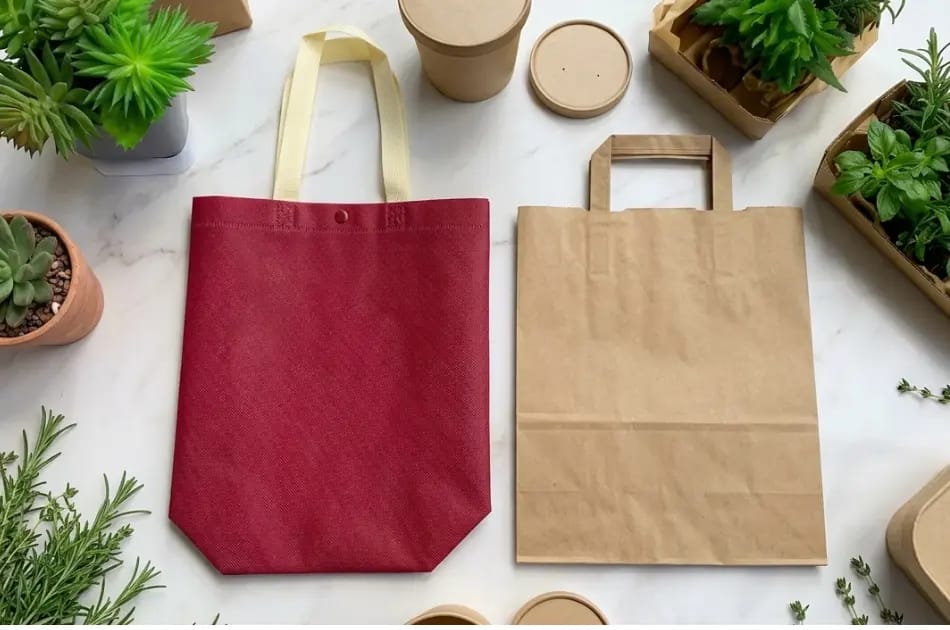
But one question often comes up: should your business use woven or paper bags? Both can work well, yet they serve different needs. Paper bags are simple and widely accepted, while woven bags are stronger, reusable, and better for heavier takeaway or delivery orders. In this comparison, we look at which bag type works best for different takeaway and delivery needs in the UK market.
What Are Woven Bags?
Woven bags are usually made from woven polypropylene or similar reusable fabric-style materials. The material is stitched or woven to create a strong structure, making the bag tougher than a standard paper carrier bag.
For UK restaurants, takeaways, and food delivery businesses, woven bags are useful when orders are heavy, oily, packed in multiple containers, or need to travel further. Think curry boxes, rice meals, family platters, groceries, catering orders, or hot food delivery packs.
A real-world example: a London takeaway selling family biryani meals might have trouble with thin paper bags because the containers are heavy and warm. A woven bag handles the weight better, looks more premium, and can be reused by the customer later. Woven bags are especially good for businesses that want packaging to feel more premium and to last beyond a single purchase.
Key Features of Woven Bags
- Durable: Handles heavier takeaway orders better than lighter bag options.
- Water-resistant: Better for rain, spills, and delivery use.
- Reusable: Can often be reused many times, depending on care.
- Food-safe use: Suitable when used correctly for packaged food items.
- Custom branding: Can include logos, colours, QR codes, or special offers.
- Better for deliveries: Stronger and more practical for riders, drivers, and customers.
What Are Paper Bags?
Paper bags are usually made from kraft paper, recycled paper, or similar paper-based materials. They frequently come with flat, twisted, or no handles, depending on the product type and use.
Paper bags are popular with coffee shops, bakeries, sandwich shops, and light takeaway businesses. They give a natural, eco-friendly feel and are easy for customers to understand. Many people see paper as a better alternative to plastic because it is commonly recyclable and can be biodegradable depending on the coating and contamination.
The downside is simple: paper does not always perform well with moisture, grease, or heavy food containers. A paper bag may work beautifully for croissants and coffee cups, but it could struggle with multiple hot curry boxes on a rainy delivery day.
Key Features of Paper Bags
- Recyclable: A good option when the bag is clean and accepted by local recycling facilities.
- Compostable options: Some paper bags can be compostable if made from suitable materials.
- Lightweight: Easy to store, carry, and use for daily packaging needs.
- Printable: Logos, branding, and simple designs can be added easily.
Key Differences Between Woven Bags and Paper Bags
Factor | Woven Bags | Paper Bags |
Durability | Very strong | Moderate to low |
Weight capacity | Better for heavy meals | Better for light items |
Reusability | High | Usually single-use |
Eco-friendliness | Strong when reused many times | Strong when recycled or composted properly |
Cost | Higher upfront | Lower upfront |
Branding | Long-lasting brand exposure | Good for one-time brand visibility |
Water resistance | Better | Weak unless treated/coated |
Food use | Good for packed food orders | Good for dry/light food orders |
UK compliance | Must consider plastic content if applicable | Must consider recycling/composting claims |
Practical Takeaway Business Scenarios
A coffee shop may be better with paper bags. They are lightweight, easy to store, and suitable for pastries, sandwiches, cookies, and small breakfast items.
A heavy takeaway meal business should consider woven bags. If customers regularly order rice boxes, curries, noodles, family meals, or multiple containers, woven bags are safer and more practical.
A delivery-heavy restaurant will usually benefit more from woven bags. Drivers and riders need bags that do not tear easily, especially in bad weather.
A real-world example: a café selling muffins and flat whites can use Kraft paper bags without issue. But a restaurant sending two curries, rice, naan, drinks, and sides needs something stronger. That is where a woven bag makes the experience easier.
Approximate UK Pricing and Cost Per Use
Prices vary depending on size, thickness, order quantity, custom printing, and supplier. As a rough guide, simple paper carrier bags can cost only a few pence each in bulk, while custom or stronger paper bags cost more. Reusable woven or non-woven bags usually cost more upfront, but they can become cheaper per use when customers reuse them many times. Some wholesale reusable bag suppliers list non-woven polypropylene bags from under $1 to a few dollars per unit, depending on style and quantity, while custom woven polypropylene bags can be higher, especially for lower minimum orders or full-colour printing.
Bag Type | Approx. Unit Cost | Expected Lifespan | Approx. Cost Per Use | Best For |
Basic kraft paper bag | £0.05–£0.20 | 1 use | £0.05–£0.20 | Coffee shops, bakeries, light takeaway |
Printed paper bag | £0.15–£0.50+ | 1 use | £0.15–£0.50+ | Branded cafés, retail food shops |
Non-woven/reusable bag | £0.60–£2.00+ | 20–50+ uses | Lower over repeated use | Loyalty bags, deliveries, meal kits |
Woven polypropylene bag | £1.00–£4.00+ | 20–50+ uses | Much lower if reused | Heavy takeaway, catering, premium branding |
Thermal delivery bag | Higher cost | Long-term business use | Best as operational equipment | Food delivery and rider use |
So, paper bags win on short-term cost. Woven bags win when you care about repeated use, stronger handling, and longer brand exposure.
UK Sustainability Requirements for Takeaway Bags
UK packaging rules are moving businesses away from unnecessary single-use plastic. In England, some single-use plastic items are banned, including plastic cutlery and expanded/extruded polystyrene food and drink containers for ready-to-eat takeaway food.
The UK also has a Plastic Packaging Tax. From 1 April 2026, the rate is £228.82 per tonne for plastic packaging components with less than 30% recycled plastic content, where the rules apply. For takeaway businesses, the simple lesson is this: choose packaging that reduces waste, is suitable for the food being packed, and supports honest sustainability claims.
Woven bags can fit well with sustainability goals when customers actually reuse them. Paper bags can work well when they are recyclable, compostable where accepted, and free of grease or food waste.
Useful actions for UK takeaways:
- Use paper bags for light, dry, quick takeaway orders.
- Use woven bags for reusable customer schemes.
- Encourage customers to bring bags back.
- Add QR codes explaining reuse or recycling.
- Avoid vague claims like “100% eco” unless you can back them up.
- Choose packaging based on food type, not trend.
Which Bag Is Better for Different Takeaway Businesses?
Business Type | Better Choice | Why |
Coffee shop | Paper bags | Light, simple, affordable |
Bakery | Paper bags | Great for dry items and pastries |
Sandwich shop | Paper bags | Easy daily use |
Curry house | Woven bags | Better for heavy, warm containers |
Chinese takeaway | Woven bags | Handles multiple boxes better |
Meal prep business | Woven bags | Stronger and reusable |
Catering company | Woven bags | Better for bulk orders |
Food delivery restaurant | Woven or thermal bags | More reliable for transport |
Premium food brand | Woven bags | Stronger branding and customer value |
Budget takeaway | Paper bags | Lower upfront cost |
The best choice depends on what you sell. Light food? The paper is enough. Heavy food? Woven is safer. Want customers to remember your brand? Woven gives you more long-term value.
How Takeaway Bags Can Boost Your Brand
Both woven and paper bags can enhance your brand’s appearance. Paper bags are great for simple printed logos, short messages, and clean café-style packaging. They make the order feel neat and intentional.
Woven bags go further. Because customers can reuse them, your logo can be seen again and again. A branded woven bag can travel from the restaurant to the customer’s home, then to work, shopping, or another food order. That makes it a walking advertisement.
You can also print:
- Your logo
- Brand colours
- QR code for online ordering
- Social media handle
- Discount code
- Loyalty message
- Sustainability message
Eco horizon offers custom packaging options, including branded packaging for takeaway businesses that want their bags, containers, or food packaging to feel more professional and memorable.
Final Verdict: Paper Bags or Woven Bags?
Paper bags are better for light, low-cost, everyday takeaway use. They work well for cafés, bakeries, sandwich shops, and small grab-and-go orders. Woven bags are better for heavier takeaway meals, deliveries, reusable packaging schemes, and stronger branding. They cost more at the start, but they can deliver more value over time because customers can reuse them many times.
For many UK takeaway businesses, the smartest option is not choosing only one. Use paper bags for light orders and woven bags for larger, heavier, or premium orders.