

Eco-friendly packaging isn’t just a trendy buzzword anymore; it’s becoming a must-have for cafés and takeaways across the UK. Consumers today care deeply about sustainability, and governments are pushing regulations to reduce single-use plastics. Using affordable, eco‑friendly packaging for cafés and takeaways isn’t merely good for the planet; it’s good for business.
Not only does it help reduce waste and lower your environmental footprint, but it also meets customer expectations. People are more likely to support businesses that care about sustainability. Plus, eco-packaging trends now focus on convenience, durability, and style, making it easier than ever to switch without sacrificing practicality.
Understanding Eco‑Friendly Packaging
Eco-friendly packaging simply means using materials that minimise environmental harm, through less resource use, biodegradability, or recyclability. In the UK, cafés and takeaways are adopting packaging solutions that are compostable, recyclable, or reusable, helping businesses achieve a cleaner planet while continuing professional service standards.
What “Eco-Friendly Packaging” Actually Means
When you hear “eco-friendly packaging,” it can refer to a few different types of packaging. Each type has its advantages and best use cases, depending on your food items and disposal options. They are as follows:
- Biodegradable: Breaks down naturally over time, but may not be suitable for home composting.
- Compostable: Turns into nutrient-rich compost under proper conditions (home or industrial).
- Recyclable: Can be processed into new materials, decreasing the need for raw materials.
Why Material Choice Matters
Choosing the right material affects how your packaging can be disposed of and its ultimate environmental impact. For instance:
- Landfill: Some biodegradable items will just sit in a landfill if conditions aren’t right.
- Recycling: Aluminum and paperboard are widely recyclable, but grease or coatings can affect processing.
- Composting: Bagasse and PLA often require commercial composting to fully break down.
It’s also worth noting that regional differences in facilities exist. Some areas can compost PLA cups industrially, while others cannot, so check local recycling and composting guidelines.
5 Affordable Eco‑Friendly Packaging Solutions for Restaurants and Takeaways
Here’s a roundup of practical, budget-friendly eco options you can adopt today:
1. Bagasse (Sugarcane) Containers
How it works: Made from the leftover pulp of sugarcane after juice extraction, these containers are sturdy, heat-resistant, and perfect for saucy or hot foods.
Why it’s sustainable: Bagasse is fully compostable, breaking down naturally in commercial composting systems.
Price considerations: Affordable compared to other bioplastics and widely available in bulk.
Best use cases: Curries, rice bowls, stir-fries, and takeaway meals with sauces.
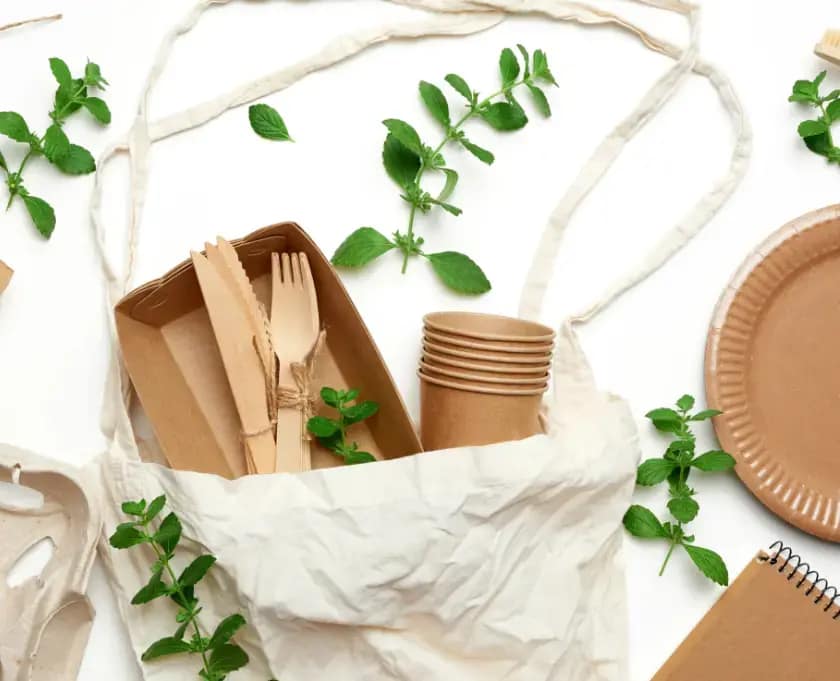
2. Recycled Kraft Paper & Paperboard Packaging
How it works: These are made from recycled paper and cardboard, often lined with a water-based coating for grease resistance.
Why it’s sustainable: Recycled content reduces resource use, and most types are recyclable again after use.
Price considerations: Very cost-effective, especially for small cafés wanting branded packaging without high printing costs.
Best use cases: Sandwiches, wraps, pastries, bakery boxes, and trays.
3. Plant-Based Bioplastics (PLA, CPLA)
How it works: Derived from renewable crops like corn or sugarcane, PLA and CPLA can be used for cups, lids, and clear containers.
Why it’s sustainable: Renewable raw materials and certified compostable, though often requiring industrial composting facilities.
Price considerations: Slightly more expensive than paper or bagasse, but still affordable when purchased in bulk.
Best use cases: Cold drinks, salads, and takeaway beverages.
4. Recyclable Aluminum Packaging
How it works: Foil trays, cups, and containers made from aluminum that can be melted down and reused.
Why it’s sustainable: Aluminum can be recycled repeatedly without losing quality, and heat retention makes it great for keeping food warm.
Price considerations: Often cheaper than specialized compostable containers when bought in bulk.
Best use cases: Hot meals, baked dishes, and bulk catering items.
5. Reusable Packaging & Zero-Waste Options
How it works: Encourage customers to bring their own cups, or implement deposit-return systems for containers.
Why it’s sustainable: Eliminates single-use packaging entirely, reducing waste dramatically.
Price considerations: May require an initial setup, but can be cost-neutral over time with incentives or discounts.
Best use cases: Coffee shops, smoothie bars, or any takeaway where customers can return containers for reuse.
How to Choose the Right Sustainable Packaging for Your Business
Match packaging to your food type:
Material | Best Use | Eco Impact |
Bagasse | Hot, saucy meals | Compostable, low environmental impact |
Paperboard | Sandwiches, bakery items | Recyclable, reusable, and cost-effective |
PLA / CPLA | Cold drinks, salads | Compostable (industrial) |
Aluminum | Hot meals, baked dishes | Highly recyclable, durable |
Reusable | Coffee, drinks | Zero waste, long-term sustainable |
Budget-Friendly Sustainable Packaging Ideas for Cafés and Takeaways
- Buy in bulk: Purchasing larger quantities can lower your cost per unit and reduce the frequency of deliveries, saving time and reducing carbon emissions. Bulk orders also make it easier to maintain a consistent supply, so you never run out during peak hours.
- Test samples first: Try small batches to see how the packaging performs with your menu items. This helps prevent waste, ensures food stays fresh, and avoids investing in products that don’t meet your business needs.
- Start with high-impact items: Focus on products that get used the most, like cups, clamshells, or takeaway boxes. This creates the biggest environmental impact and immediately shows your customers you’re making eco-friendly choices.
- Communicate with customers: Share your eco-friendly choices through signage, social media, or packaging messaging. It improves transparency, develops trust, and can make customers feel proud to support your business.
- Combine cost savings with marketing: Eco-friendly packaging can double as a branding tool. Custom prints or attractive designs enhance your café’s image while demonstrating your promise to sustainability, all without breaking the budget.
- Encourage repeat visits: Customers appreciate businesses that care about the planet. Highlighting your sustainable efforts can boost loyalty and encourage them to return or recommend your café to friends.
- Plan for long-term savings: Over time, eco-friendly options like reusable containers or efficient packaging reduce overall costs, as you rely less on disposable products and benefit from incentives or bulk discounts.
Final Thought
From bagasse containers and recycled kraft paper to PLA cups and recyclable aluminum, there are plenty of practical options to cut waste and delight environmentally aware customers. By starting with a few key changes, testing what works, and communicating your efforts clearly, cafés and takeaways can make real progress toward eco-friendlier operations. For businesses looking for support along the way, Eco Horizon offers a wide range of eco-friendly packaging solutions to help make that transition simple and affordable