Free delivery within London and across the UK
Packaging Regulations UK 2026: What Restaurants and Takeaways Must Know
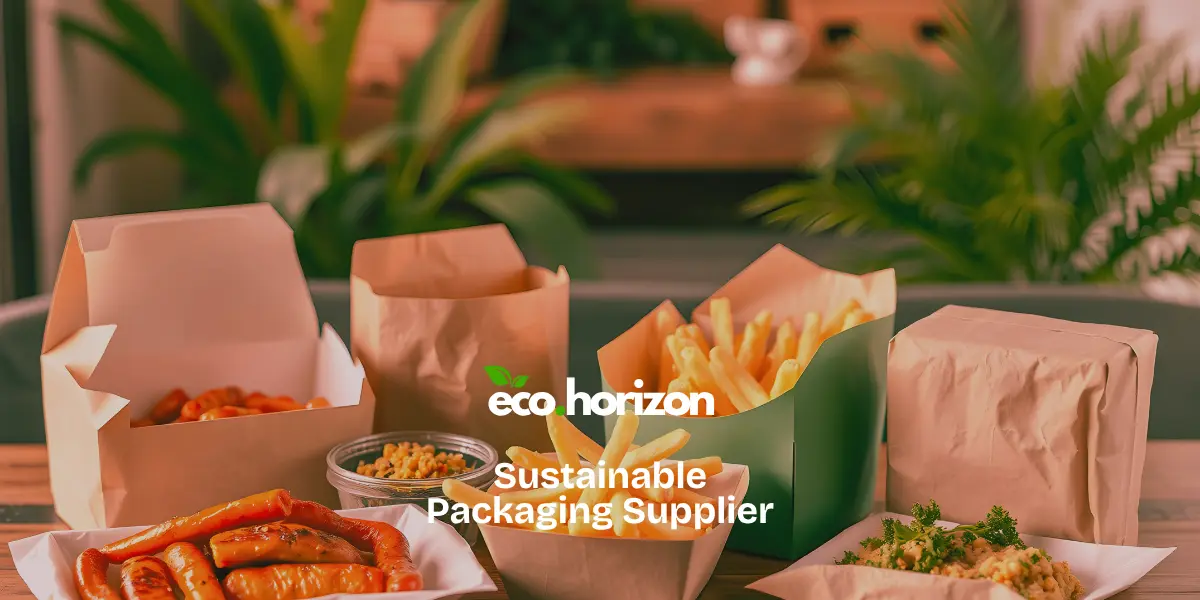

Table of Contents
Reduce your business’s carbon footprint with Eco Horizon sustainable packaging
UK packaging regulations are placing greater responsibility on businesses to consider how packaging is produced, used, and disposed of. Restaurants, cafés, and takeaways should be aware of Extended Producer Responsibility (EPR), Plastic Packaging Tax, single-use plastic restrictions, and packaging waste reporting requirements. Reviewing packaging materials now and choosing practical, recyclable, reusable, or lower-impact alternatives can help hospitality businesses prepare for future requirements.
Key Takeaways:
- Understanding UK packaging regulations, including EPR, Plastic Packaging Tax, and single-use plastic restrictions, helps restaurants and takeaways avoid unexpected costs and compliance issues.
- Most independent hospitality businesses won't have direct reporting duties, but knowing the turnover and tonnage thresholds helps you confirm where your business actually stands.
- Even without direct obligations, packaging regulations still affect your business indirectly through supplier pricing, material availability, and shifting sustainability expectations.
- Choosing packaging with genuine recyclability and verified recycled content, rather than relying on eco-labels, supports better long-term cost control and compliance readiness.
- Working with a knowledgeable packaging supplier and staying informed on regulatory changes can help your business adapt smoothly while continuing to meet customer expectations.
Packaging decisions used to come down to cost, convenience, and presentation. In 2026, they also come down to compliance. Three pieces of legislation now shape how hospitality businesses buy and use packaging: Extended Producer Responsibility (EPR) under the Producer Responsibility Obligations (Packaging and Packaging Waste) Regulations 2024, the Plastic Packaging Tax (PPT), and the single-use plastics ban introduced under the Environment Act 2021. This guide sets out what each one actually requires, using figures and dates published by HMRC, DEFRA, and the Environment Agency, so you can judge what applies to your business and what doesn’t.
What is Extended Producer Responsibility (EPR)?
EPR shifts the cost of managing packaging waste onto the businesses that put packaging on the market, rather than leaving it to local authorities to absorb through council tax. It replaced the older Packaging Recovery Note system, under which producers covered only a fraction of the actual cost of collecting and recycling their packaging.
Do EPR obligations apply to you?
Your business only has reporting duties if it meets both of these thresholds, assessed at group level rather than per site:
- Annual turnover of £1 million or more, based on your most recent accounts up to 7 April
- You supplied or imported more than 25 tonnes of packaging in the previous calendar year
Businesses that clear both thresholds fall into one of two bands:
- Small producers: turnover between £1 million and £2 million, handling 25 to 50 tonnes a year. They must report packaging data annually but don’t currently pay waste management fees.
- Large producers: turnover of £2 million or more, handling more than 50 tonnes a year. They report twice a year, pay waste management fees, and must obtain Packaging Waste Recovery Notes (PRNs) or Packaging Export Recovery Notes (PERNs) to meet recycling targets.
Most independent restaurants and single-site takeaways sit comfortably under these thresholds and carry no direct reporting duty. Multi-site chains, franchise groups with centralised purchasing, and any business that imports its own branded packaging should check both figures carefully, since obligations apply to the group as a whole, not to each individual outlet.
Why EPR still matters if you’re exempt?
From the 2026 to 2027 scheme year, large producers’ fees move from flat rates to a red, amber, and green system based on the Recyclability Assessment Methodology. Packaging rated green costs less; packaging rated red costs more. That cost pressure flows down through supplier pricing well before it reaches an obligated producer’s own invoice, which is why packaging that scores well on recyclability is increasingly the cheaper option to stock, even for businesses with no reporting duty of their own. Late payment penalties for obligated producers are also significant, set at whichever is greater of 20% of the unpaid fees or a percentage of turnover, which explains why suppliers treat EPR compliance as a serious cost driver rather than a background administrative task.
Eco Friendly
Personalised Packaging
Personalised Packaging
Personalised packaging helps your business to make a strong first impression and improve customer recognition with every order.
Plastic Packaging Tax (PPT)
PPT is a per-tonne charge on plastic packaging that falls short of a recycled-content threshold, designed to make recycled plastic more commercially attractive than virgin material.
The current rate and who registers
- Rate: £228.82 per tonne from 1 April 2026, up from £223.69 the previous year, charged on packaging containing less than 30% recycled plastic content
- Registration threshold: businesses that manufacture or import 10 tonnes or more of finished plastic packaging components in a rolling 12-month period
- Who actually pays: the manufacturer or importer of the packaging, not the restaurant or café that buys finished containers, cups, or cutlery from them
The rate has risen every April since PPT began in April 2022, from an initial £200 per tonne, and is uprated annually in line with the Consumer Price Index. HMRC treats this as a predictable, incremental increase rather than a one-off change, so suppliers plan pricing around it years in advance.
Why It Still Affects Your Purchasing?
If you buy packaging ready-made from a UK supplier, you have no registration or reporting duty yourself. But the tax still shapes what you’re offered and what it costs. HMRC treats biodegradable, compostable, and oxo-degradable polymers as plastic for PPT purposes, so PLA cups, CPLA lids, and PE-lined paper cups are taxable unless their plastic component hits the 30% recycled-content threshold, which most currently don’t. A compostable label tells you nothing about tax status. Materials outside the plastic definition entirely, like bagasse and uncoated paper fibre, are unaffected by PPT regardless of recycled content, narrowing the price gap with conventional plastic. Meanwhile, rising demand for recycled PET is pushing its price up too, so switching to recycled plastic doesn’t guarantee a lower cost. The upshot: asking a supplier for actual recycled-content percentage and base material tells you more about future cost than any sustainability label.
Are the packaging rules the same across the UK?
Scotland introduced a broadly similar ban in August 2022, though it excludes single-use straws and balloon sticks from its scope. Wales passed comparable legislation that took effect from 2024. If you operate across more than one UK nation, treat these as separate rule sets rather than assuming England's exemptions apply everywhere.
Single-Use Plastic Restrictions
Since 1 October 2023, businesses in England have been barred from supplying, selling, or offering certain single-use plastic items to the public, under regulations made through the Environment Act 2021. The restriction sits alongside an earlier ban on single-use plastic straws, stirrers, and cotton buds, which has applied since October 2020.
What is covered under the restrictions?
The 2023 restriction applies to:
- Single-use plastic cutlery and balloon sticks
- Single-use plastic plates, bowls, and trays supplied to the public
- Ready-to-consume food and drink served in polystyrene containers or cups, covering both expanded and extruded polystyrene
The ban covers new and existing stock, and applies to every type of single-use plastic, including biodegradable, compostable, and recycled formulations, and to items only partly made of plastic, such as a plastic coating or lining on an otherwise non-plastic product.
Exemptions worth knowing
Plastic plates, bowls, and trays are exempt when they’re used as packaging for food that’s pre-filled or filled at the point of sale, such as a salad bowl sealed before it reaches the customer, and one business can still supply these items to another business for that specific purpose. Single-use plastic straws remain permitted for catering establishments serving food or drink for immediate consumption, but only if the straws are kept out of customer sight and not available for self-service, and medical-use straws are exempt entirely.
Polystyrene containers are still allowed where the food or drink needs further preparation before it can be consumed. Local authority trading standards teams carry out inspections, and continuing to supply banned items after the fact can result in a fixed penalty notice.
How These Regulations Affect Your Business?
For most independent restaurants and takeaways, the direct compliance burden across all three regimes is small: you likely won’t register for EPR or PPT yourself, and the single-use plastics ban is now over two years old, so most businesses have already made the switch it required. The ongoing impact instead shows up in three places:
- Supplier price shifts, as manufacturers pass through PPT and EPR costs weighted toward materials with poor recyclability or low recycled content
- Narrower sourcing options, since restricted single-use plastic formats are no longer legally available from any UK supplier
- A widening price gap in favour of alternatives, as paper-based, bagasse, and reusable materials increasingly sit outside both PPT and the higher EPR fee bands
The one action worth taking now, if you haven’t already: ask your current supplier directly for the recycled-content percentage and base material of your packaging line, rather than relying on a compostable or eco label. That single question tells you more about future cost exposure than any marketing claim on the box.
How Eco Horizon Can Help Your Food Business?
Eco Horizon supplies kraft food containers, paper bowls, woven reusable bags, thermal delivery bags, and custom branded packaging to restaurants, cafés, and takeaways across the UK. Because these materials sit outside the scope of PPT and generally score well under EPR’s recyclability system, they help hospitality businesses manage the indirect cost pressure created by 2026’s regulatory changes, without requiring any in-house compliance expertise.
This guide summarises publicly available regulatory information from HMRC, DEFRA, and the Environment Agency as of September 2026. It isn’t a substitute for advice from HMRC, the Environment Agency, or a qualified compliance specialist about your specific circumstances
Share this post

Elizabeth M
Elizabeth is Eco Horizon’s Marketing Manager, writing practical guides on sustainable and food packaging for UK businesses.
You might be interested
Elizabeth M
8 September 2026
Elizabeth M
4 September 2026
Elizabeth M
25 August 2026
Elizabeth M
11 June 2026
Elizabeth M
3 June 2026