Free delivery within London and across the UK
Eco-Friendly Food Packaging for Restaurants and Takeaways in The UK
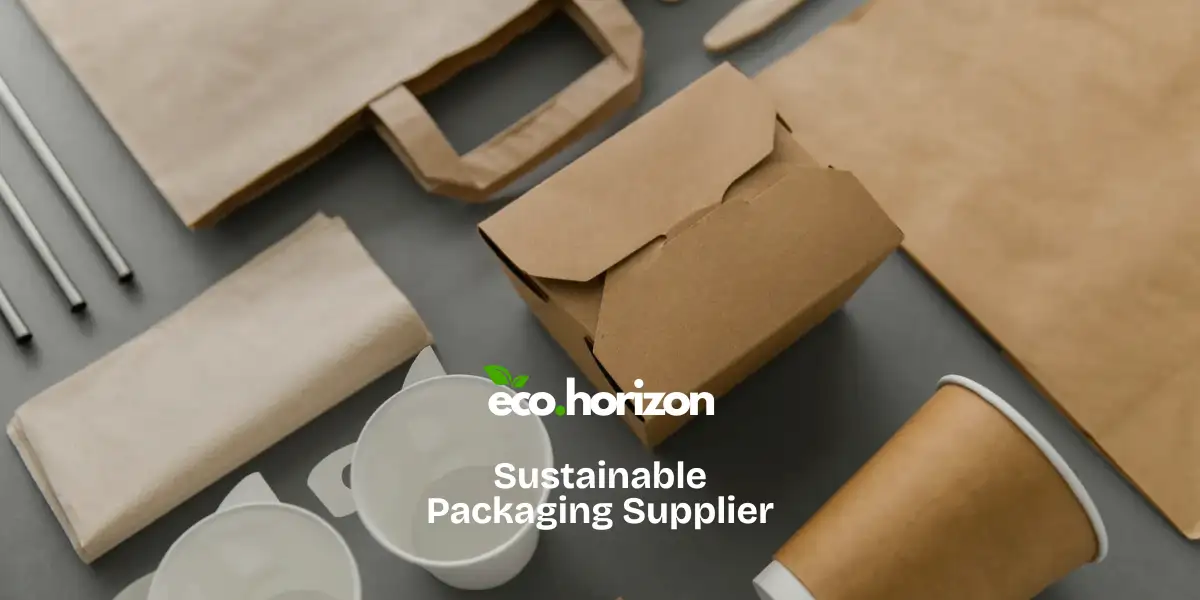

Table of Contents
Reduce your business’s carbon footprint with Eco Horizon sustainable packaging
Choosing eco-friendly food packaging for restaurants means more than swapping plastic for paper. It needs to keep food safe, prevent leaks, support delivery and cut unnecessary waste while meeting customers’ rising sustainability expectations.
The right choice depends on the food served, from hot, greasy meals to cold dishes and takeaway orders. Businesses should weigh up materials, durability, recycling options and whether packaging claims are backed by real evidence, not vague eco labels.
Eco Horizon helps UK restaurants and takeaways find practical, sustainable food packaging including kraft containers, paper bowls, reusable bags and delivery packaging built for everyday hospitality needs.
Key Takeaways:
- Eco-friendly food packaging is not just about replacing plastic; it must also protect food, support delivery and reduce waste.
- Restaurants should choose packaging based on their menu, including food temperature, moisture, grease levels and delivery time.
- Terms like recyclable, compostable and biodegradable mean different things, so businesses should check supplier information carefully.
- Testing packaging with real meals before placing large orders helps avoid leaks, damage and unnecessary costs.
-
Reducing extra packaging, choosing the right sizes and improving disposal guidance can make a real difference.
- Sustainable packaging can improve customer experience, strengthen brand image and support long-term business goals.
For restaurants and takeaways, packaging must keep food secure, maintain presentation and make collection or delivery convenient. It also affects how customers view the quality and values of a business.
Choosing eco-friendly food packaging for takeaways and restaurants in the UK requires more than replacing plastic with paper. Businesses must consider food safety, moisture resistance, durability, disposal facilities and the amount of material used. A recyclable container offers limited value if food residue prevents recycling, while compostable packaging only works as intended when it reaches a suitable waste facility.
This guide explains the main packaging choices available to UK food businesses, how they can reduce waste and what to check before changing suppliers or placing a large order.
What Is Eco-Friendly Food Packaging for Restaurants and Takeaways?
Eco-friendly packaging is designed to reduce avoidable material use, support recycling or reuse, and limit dependence on unsuitable single-use products. It can include recyclable paper containers, fibre-based boxes, reusable carriers, responsibly sourced card and certified compostable items.
For food businesses, environmental performance is only one requirement. Packaging must also be food-safe, strong enough for the expected weight and suitable for the temperature, moisture and grease content of the meal. The Food Standards Agency notes that packaging may need liquid-resistant or fat-resistant properties to prevent leaks and stop materials such as paper from becoming soaked.
A responsible choice considers the complete packaging journey:
- How the material is sourced and manufactured
- Whether it is suitable for direct food contact
- How much material is used
- Whether customers can reuse it
- Whether local services accept it for recycling or composting
- How clearly disposal instructions are communicated
Terms such as recyclable, compostable and biodegradable do not mean the same thing. Businesses should request clear material specifications and avoid relying on an “eco” label without supporting information.
Why Sustainable Packaging Matters for UK Food Businesses
Restaurants, cafés and takeaways use large quantities of bags, cups, lids, containers and cutlery. Improving a high-volume packaging item can reduce waste across hundreds of orders without changing the menu or service model.
Packaging also forms part of the customer experience. A box that collapses, a lid that leaks or a carrier that cannot support the order may affect how customers judge the food and the business. Suitable environmentally friendly packaging should therefore combine practical performance with reduced material impact.
Better packaging choices can help businesses:
- Reduce unnecessary single-use items
- Prevent food damage and leakage
- Improve collection and delivery presentation
- Provide clearer disposal information
- Support measurable waste-reduction targets
- Prepare for changing packaging requirements
Sustainability should be treated as an operational process rather than a promotional claim. The strongest approach begins by reviewing what the business currently uses, identifying unnecessary materials and testing alternatives with real menu items.
Benefits of Eco-Friendly Food Packaging for Restaurants and Takeaways
The right packaging can provide environmental, operational and commercial benefits.
Less Avoidable Waste
Correctly sized boxes and bags reduce space and unnecessary material. Stronger packaging can also prevent double-bagging and the replacement of damaged containers.
Improved Food Protection
Well-matched packaging helps keep meals stable during transport. Leak resistance, ventilation and secure closures can protect food quality and reduce customer complaints.
A More Consistent Brand
Printed bags, sleeves and containers can connect takeaway orders with the restaurant’s menus, signage and digital channels. This creates a more recognisable experience for customers.
Clearer Sustainability Communication
Specific statements such as “made with recycled paper” or “designed for repeated use” are easier to understand and verify than broad claims such as “completely green”.
Better Long-Term Planning
Reviewing packaging materials, costs and waste can help businesses make gradual improvements instead of reacting to new rules or supplier changes at the last moment.
The benefits depend on actual performance. Packaging should be assessed according to the food it carries, the delivery journey and the available end-of-life route.
From Kitchen to Customer: Sustainable Packaging That Lasts
Eco friendly Woven Bags, Kraft Containers, Paper Bowls and Thermal Bags designed for restaurants and takeaways that care for the planet.
Types of Eco-Friendly Packaging for Food Businesses
Different menu items require different materials. The following comparison provides a practical starting point.
Packaging type | Common applications | Main considerations |
Kraft paper containers | Rice, pasta, salads and hot meals | Check lid fit, grease resistance, lining and recycling guidance |
Paper bags | Bakery products, sandwiches and lighter orders | Moisture and heavy loads may reduce strength |
Paper bowls | Soups, noodles, salads and desserts | Confirm heat tolerance and whether the lid is made from another material |
Moulded-fibre containers | Main meals, side dishes and catering portions | Test closing strength, moisture resistance and storage space |
Reusable woven bags | Larger collections, meal bundles and catering orders | Their value depends on durability and repeated use |
Compostable packaging | Selected boxes, cups, liners and cutlery | Requires the correct collection and composting conditions |
Reusable food packaging | Return schemes, deposits and repeat customers | Requires cleaning, collection and loss-management procedures |
FSC-Certified Packaging
For paper and card products, an FSC label indicates that the product or material is covered by a recognised Forest Stewardship Council certification claim. The label must be applied through a valid certificate holder and authorised certification process. Businesses should confirm whether the certification applies to the packaging itself and retain supplier documentation.
Plastic-Free Food Packaging
Products described as plastic-free food packaging should be checked carefully. Some paper containers include plastic linings, windows or coatings that affect disposal. Ask the supplier for the full material composition rather than judging the product by its appearance.
Recyclable Takeaway Packaging
Recyclability depends on more than the base material. Food contamination, mixed components and local collection systems can all influence whether an item is accepted. Clear instructions should explain whether customers need to empty, rinse or separate parts.
How Eco-Friendly Packaging Helps Reduce Waste
Packaging waste reduction begins before an item reaches the customer. Businesses can reduce waste through purchasing, portion planning, storage and staff procedures.
Practical actions include:
- Remove unnecessary extras. Do not automatically include cutlery, napkins or sauce sachets when customers have not requested them.
- Use suitable container sizes. Oversized packaging wastes material and allows food to move during delivery.
- Avoid double packaging. Test stronger alternatives where staff regularly use two bags or containers.
- Introduce reuse where practical. Durable bags or returnable containers may suit catering clients and regular local customers.
- Improve stock control. Avoid large orders of packaging that may become unsuitable after a menu or branding change.
- Provide disposal guidance. Clear instructions reduce confusion and help customers separate components correctly.
These actions support a more circular approach by keeping materials in use for longer and reducing avoidable disposal. Circular economy packaging is not simply a type of product; it is a system that considers reduction, reuse, collection and recovery.
Businesses can measure progress by tracking monthly packaging purchases, damaged-order rates, unused stock, customer feedback and waste collection data.
Choosing the Right Packaging for Your Restaurant or Takeaway
The right packaging should match the menu and service journey. A café selling pastries has different requirements from a takeaway delivering curries, soups or family meals.
Before ordering, consider:
Food Type
Hot, cold, greasy, liquid and delicate foods require different levels of ventilation, insulation and moisture resistance.
Delivery Time
A container that performs well for a five-minute collection may not remain stable during a forty-minute delivery.
Size and Weight
Packaging should hold normal portions without crushing food or leaving excessive empty space. Outer bags must support the combined weight of the order.
Storage and Staff Handling
Large or awkward products can create storage problems. Staff should be able to assemble, close and stack the packaging quickly during busy periods.
Customer Disposal
Consider whether customers have realistic access to the recycling, composting or return route required by the product.
Supplier Evidence
Ask for food-contact information, material composition, certifications, minimum quantities, lead times and end-of-life guidance.
Samples should be tested with real meals before a larger order is approved. Check heat resistance, leakage, lid security, condensation, carrying comfort and presentation after the expected delivery time.
UK Packaging Regulations Every Food Business Should Know
Packaging requirements can differ across England, Scotland, Wales and Northern Ireland. Businesses should confirm which national and local rules apply to their operations.
Food-Contact Safety
Materials that touch food must be suitable for their intended purpose. Packaging should not transfer unsafe substances to food and must perform properly under expected conditions such as heat, grease and moisture. The Food Standards Agency guides food packaging and regulated food-contact materials.
Single-Use Plastic Restrictions
In England, the sale or supply of certain single-use plastic products is restricted or prohibited. This includes single-use plastic cutlery and expanded or extruded polystyrene food and drink containers used for ready-to-consume products. Restrictions also apply to certain plates, bowls and trays, although exemptions can depend on how products are packaged and supplied.
Carrier Bag Charges
Retailers of all sizes in England must generally charge at least 10 pence for qualifying single-use plastic carrier bags. Different charging schemes operate in Scotland, Wales and Northern Ireland.
Extended Producer Responsibility
The UK’s Extended Producer Responsibility scheme may create packaging data, registration and fee obligations for organisations that import, fill, supply or place packaging on the UK market. Whether a restaurant is affected depends on its activities, turnover and the amount of packaging it handles. Current guidance identifies reporting requirements for qualifying organisations supplying more than 25 tonnes of packaging with annual turnover above £1 million. Businesses near these thresholds should review the official guidance or obtain professional compliance advice.
Regulations change, so packaging policies should be reviewed regularly rather than treated as a one-time exercise.
Common Mistakes to Avoid When Switching to Green Packaging
Switching to eco-friendly food packaging for restaurants often fails not due to the product, but the process. Common mistakes include choosing by looks over performance, treating all eco-terms as equal, changing everything at once, ignoring local waste realities, picking on price alone, making unsupported claims, and excluding staff insights.
Common Mistakes to Avoid When Switching to Green Packaging
Switching to eco-friendly food packaging for restaurants often fails not due to the product, but the process. Common mistakes include choosing by looks over performance, treating all eco-terms as equal, changing everything at once, ignoring local waste realities, picking on price alone, making unsupported claims, and excluding staff insights.
How Sustainable Packaging Improves Customer Experience and Brand Image
Good restaurant takeaway packaging protects the meal and makes the order easier to carry, open and store. When packaging performs reliably, customers are more likely to associate that care with the quality of the business.
Sustainable packaging can support brand image by:
- Creating a consistent appearance across collections and deliveries
- Showing attention to material use and waste
- Providing useful reuse or disposal instructions
- Displaying ordering details or a QR code
- Helping the business communicate specific environmental actions
Custom branded packaging should remain simple. A clear logo, limited colour palette and short message are usually more effective than covering every surface with promotional text.
Environmental wording must also be accurate. Claims should reflect evidence supplied by the manufacturer or distributor. The UK Competition and Markets Authority states that green claims must be truthful, clear and substantiated.
Customer trust grows when packaging claims match the business’s wider actions, such as reducing unnecessary cutlery, separating waste and reviewing suppliers.
Why More UK Restaurants Are Investing in Sustainable Packaging
UK food businesses are reconsidering packaging because waste rules, supplier costs and customer expectations are changing. Carrier bag charges and restrictions on selected single-use plastic items have already altered how businesses purchase and distribute packaging. Extended Producer Responsibility is also placing greater attention on who supplies packaging and how its waste costs are managed.
Restaurants are also recognising the operational cost of poor packaging. Leaks, oversized stock, double-bagging and unsuitable containers create waste as well as customer dissatisfaction.
Investment in sustainable business packaging is therefore driven by several practical factors:
- Reducing unnecessary material and stock
- Improving delivery performance
- Responding to regulatory changes
- Strengthening brand credibility
- Providing clearer disposal options
- Preparing for future packaging costs
The most successful changes are based on evidence. Businesses should monitor costs, packaging failures, customer feedback and waste volumes rather than assuming that a new material automatically produces a better result.
Why Choose EcoHorizon for Food Packaging in the UK
EcoHorizon supplies eco-friendly food packaging for restaurants, cafés, takeaways, caterers and delivery businesses across London and the wider UK. Its range includes kraft containers, paper bowls, reusable woven bags, thermal delivery bags and personalised packaging options.
Businesses can choose products according to their menu, order size, delivery requirements and branding goals rather than relying on one standard format.
EcoHorizon offers:
- Food packaging for hot and cold dishes
- Reusable woven carriers for larger orders
- Thermal bags for delivery operations
- Custom printing and personalised designs
- Free product samples
- Delivery across London
- Support with product sizes and applications
A free sample allows restaurant teams to test container fit, strength, presentation and handling before committing to a larger quantity. This is particularly useful for smaller businesses that need to manage stock and purchasing costs carefully.
EcoHorizon’s range provides practical hospitality packaging for businesses looking to improve functionality, presentation and sustainability without overlooking everyday service requirements.
Final Thoughts
The best eco-friendly food packaging for restaurants and takeaways in the UK should protect food, suit daily operations and provide a realistic route for reuse, recycling or disposal.
Restaurants should compare materials carefully, test samples with real menu items and request evidence for environmental claims. A gradual change is often more effective than replacing every product at once.
By reducing unnecessary packaging, choosing appropriate sizes and monitoring performance, food businesses can lower waste while improving the customer experience.
Share this post

Elizabeth M
Elizabeth is Eco Horizon’s Marketing Manager, writing practical guides on sustainable and food packaging for UK businesses.
You might be interested
Elizabeth M
15 September 2026
Elizabeth M
8 September 2026
Elizabeth M
4 September 2026
Elizabeth M
25 August 2026
Elizabeth M
11 June 2026