Free delivery within London and across the UK
Woven Bags vs Paper Bags: Which Is Better for Takeaway Business in the UK?
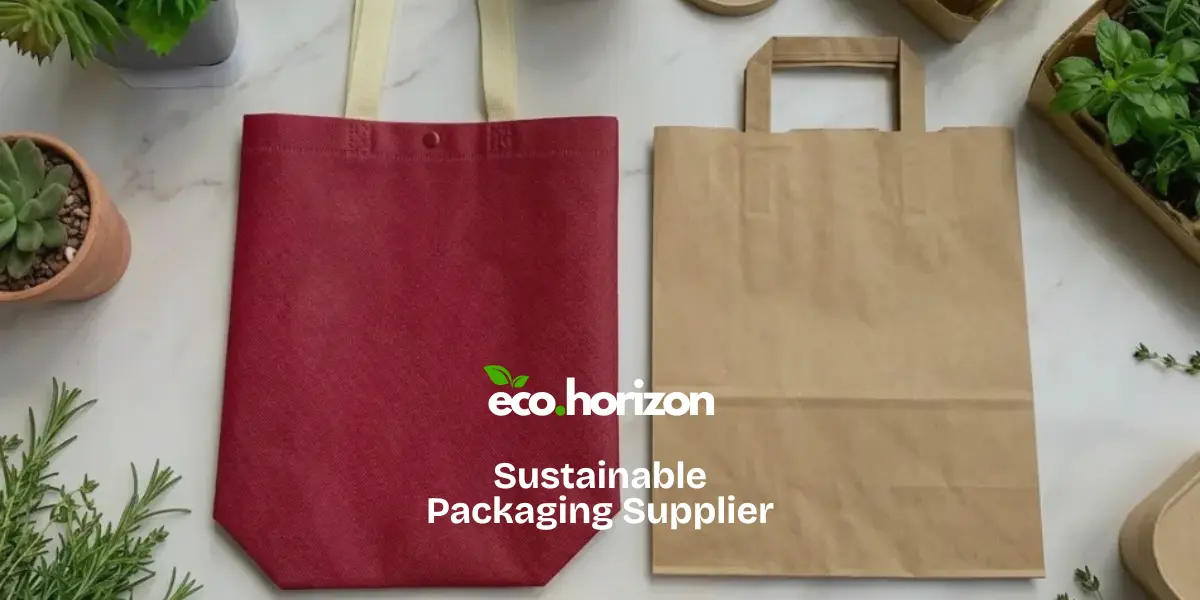

Table of Contents
Reduce your business’s carbon footprint with Eco Horizon sustainable packaging
When comparing woven bags vs paper bags, the right choice depends on order size and how your business operates. Paper bags are lightweight and cost-effective, ideal for smaller orders from cafés and bakeries. Woven bags suit heavier meals and delivery runs; reinforced stitching withstands repeated use, and unlike single-use paper bags, they’re built to be reused many times before disposal.
For businesses investing in branding, woven bags offer a stronger canvas; custom printing stays legible wash after wash, turning packaging into a repeat marketing touchpoint. Paper bags still make sense for high-volume, low-weight orders where simplicity matters most.
Many UK takeaway businesses run both: paper for counter service, woven for delivery, matching packaging to order type.
Key Takeaways:
- Woven bags provide better durability and reusability, rendering them ideal for heavy takeaway orders, food delivery, and repeated customer use.
- Paper bags, including kraft paper bags and brown paper bags, are affordable and practical for lightweight food items such as bakery products, sandwiches, and drinks.
- Reusable packaging helps businesses reduce dependence on single-use options while creating a stronger connection with eco-conscious customers.
- Custom printed woven bags offer long-term branding value because customers can continue using them after their original purchase.
- The best packaging choice depends on business needs, including food type, order weight, delivery requirements, and eco-friendly targets.
Packaging has become an important part of the takeaway experience. For restaurants, cafés, bakeries, and food delivery businesses across the UK, a bag is not just something used to carry an order. It protects food, supports customer convenience, and influences how people view a brand.
As businesses look for more environmentally friendly packaging, the choice between woven bags vs paper bags has become a common discussion. Both choices have their own advantages. Kraft paper bags and brown paper bags are popular because they offer a simple, natural appearance and are widely accepted by customers. On the other hand, woven bags provide extra strength, durability, and the ability to be reused many times.
The right choice depends on the type of food being sold, order size, delivery requirements, and the business’s long-term goals. A small café selling sandwiches and pastries may have different needs from a busy takeaway restaurant handling large family meals.
This guide compares woven bags vs paper bags to help UK food businesses understand which option provides the best balance of performance, sustainability, and value.
What Are Woven Bags and Paper Bags?
Choosing the right packaging starts with understanding how each bag type is made and where it performs best.
Woven Bags
Woven bags are made by weaving polypropylene (PP) threads together to create a strong and flexible structure. Unlike thin disposable carriers, woven bags are made for durability and repeated use.
Many businesses choose woven bags because they can handle heavier loads without easily tearing or losing their shape. They are commonly used for takeaway meals, catering orders, food delivery collections, and larger customer purchases.
For businesses seeking longer protection, laminated woven bags deliver an additional layer that improves appearance, strength, and resistance to moisture. This makes them useful for restaurants dealing with different weather conditions or customers carrying food over longer distances.
Another major advantage is customisation. Custom printed woven bags allow businesses to display logos, brand colours, QR codes, and promotional messages. Because customers often reuse these bags, they continue promoting the business beyond the first purchase.
Paper Bags
Paper bags are commonly produced from kraft paper or recycled paper materials. They are widely used by cafés, bakeries, takeaway shops, and retail businesses because they are affordable and easy to store.
Kraft paper bags have become especially popular because of their natural appearance and simple recyclable design. Many customers associate brown paper packaging with sustainability and handmade products.
However, paper bags have limitations. They are less suitable for very heavy, hot, or oily food orders because moisture and weight can weaken the material.
A paper bag works well for:
- Sandwiches
- Pastries
- Cakes
- Coffee cups
- Small takeaway orders
For larger meals containing multiple containers, woven bags usually provide better reliability.
Woven Bags vs Paper Bags: Key Differences
When comparing woven bags vs paper bags, businesses should consider more than just the initial purchase price.
Feature | Woven Bags | Paper Bags |
Durability | Very strong and long-lasting | Suitable for lighter use |
Reusability | Can be reused many times | Usually limited reuse |
Weight Capacity | Handles heavier orders | Better for lightweight products |
Water Resistance | Higher resistance to moisture | Can weaken when wet |
Cost | Higher upfront investment | Lower initial cost |
Branding | Excellent custom printing options | Good for simple branding |
Sustainability | Strong when reused regularly | Good when recycled properly |
Best Use | Delivery, catering, heavy meals | Cafés, bakeries, small orders |
Woven bags often provide better long-term value because one bag can replace multiple disposable alternatives. Although the upfront cost is higher, businesses may benefit from reduced replacement costs over time. Paper bags remain attractive because they are simple, affordable, and suitable for businesses with lower packaging demands.
Which Bag Is Better for Takeaway Businesses?
There is no single answer because every food business operates differently.
Restaurants Selling Heavy Meals
Restaurants offering curry, rice dishes, noodles, family meals, and combination orders often need stronger packaging.
A woven bag can support:
- Multiple food containers
- Drinks
- Larger meal portions
- Catering-style orders
For these businesses, woven bags can improve the customer experience by making transportation easier and safer.
Cafés and Bakeries
Cafés and bakeries usually have different requirements. Products such as coffee, pastries, sandwiches, and cakes are lighter and easier to carry.
In these situations, brown paper bags or kraft paper bags may be the better option because they are cost-effective and match the simple, natural appearance many cafés prefer.
Food Delivery Businesses
Delivery businesses need packaging that can handle movement, weather conditions, and longer travel distances.
Woven bags offer advantages because they are:
- Stronger during transportation
- Less likely to tear
- Easier for drivers and riders to carry
For delivery-focused businesses, durable reusable packaging can help maintain product quality from kitchen to customer.
Switch to Sustainable Woven Bags Today
Trusted by the UK restaurants, cafés and takeaways.
Sustainability Comparison: Eco-Friendly Bags and Reusable Packaging
Sustainability has become an important consideration for UK businesses. Customers increasingly want brands to make responsible packaging choices.
Both woven bags and paper bags can support sustainability when used correctly.
Reusable Packaging Benefits
The biggest advantage of woven bags is their ability to be reused. A single reusable bag can replace many disposable alternatives when customers continue using it.
This type of reusable packaging can help businesses:
- Reduce packaging waste
- Improve customer loyalty
- Support long-term green targets
Paper Bag Sustainability
Paper bags can also be a sensible choice. When made from suitable materials and disposed of correctly, they can support recycling systems.
However, recycling depends on local facilities and whether the bag is clean and free from food contamination.
Choosing Responsible Packaging
Businesses should concentrate on practical sustainability rather than simply choosing a material because it looks environmentally friendly.
Good packaging should:
- Match the product requirements
- Last as long as possible
- Reduce unnecessary waste
- Provide clear disposal guidance
Both woven and paper options can contribute to ecologically responsible packaging approaches.
Cost, Durability and Long-Term Business Value
Price is an important factor for every takeaway business, but the cheapest option is not always the most cost-effective. Paper bags usually have a lower upfront price, rendering them appealing for businesses handling significant volumes of smaller orders.
However, woven bags provide value through extended use. A strong reusable bag can continue working for many orders, lessening the need for constant replacements. For example: A café selling one sandwich order may find a paper bag perfectly suitable. A restaurant delivering several meals every evening may save more value by investing in stronger reusable bags.
Businesses should consider:
- Number of daily orders
- Average order size
- Customer reuse behaviour
- Branding benefits
A higher-quality bag can become both packaging and a marketing tool.
How Custom Woven Bags Improve Brand Exposure?
Packaging is often the final physical interaction customers have with a business. A well-designed bag can leave a positive impression. Custom printed woven bags allow businesses to convert ordinary packaging into a branding opportunity. Businesses can add logos, website addresses, QR codes, social media details A branded woven bag can become a moving advertisement when customers use it for shopping, commuting, or future takeaway purchases.
How to Choose the Right Packaging for Your Business
Before selecting packaging, businesses should consider their daily operations and customer needs.
Ask these questions:
What type of food do you sell?
Light products may work well with paper bags, while heavier meals usually require stronger options.
How are orders delivered?
Businesses offering delivery should prioritise packaging that can handle movement and weather.
Do you want long-term branding?
If building brand awareness is important, custom woven bags provide more opportunities.
What eco-friendly targets do you have?
Businesses focused on cutting waste may benefit from reusable packaging solutions.
The right choice is not always one bag type. Many successful businesses combine different packaging options depending on the order.
Final Verdict
When comparing woven bags vs paper bags, both options grant valuable benefits.
Paper bags are an excellent choice for cafés, bakeries, and businesses handling smaller, lighter takeaway orders. They are affordable, practical, and familiar to customers.
Woven bags are a stronger choice for restaurants, delivery businesses, catering companies, and brands that want durable packaging with long-term value.
For businesses looking for sustainable bags, stronger performance, and better branding opportunities, woven bags provide an effective solution. Options such as laminated woven bags and custom-printed woven bags allow companies to combine functionality with professional presentation.
EcoHorizon helps UK restaurants, cafés, and takeaway businesses choose reliable environmentally friendly packaging solutions designed for modern customer expectations.
Whether you need reusable packaging, retail shopping bags, or custom takeaway solutions, selecting the right bag can improve your operations, customer experience, and brand image.
Share this post

Elizabeth M
Elizabeth is Eco Horizon’s Marketing Manager, writing practical guides on sustainable and food packaging for UK businesses.
You might be interested
Elizabeth M
8 September 2026
Elizabeth M
4 September 2026
Elizabeth M
25 August 2026
Elizabeth M
11 June 2026
Elizabeth M
3 June 2026